Saturday, November 1, 2014

#36 Parti-gyle Bitter - Recipe

Recipe     -     Brewday     -     Tasting

As I mentioned in my last post, I've been comissioned to brew a batch of beer for an upcoming art show!  It's exciting to have someone request beer not only for themselves but to serve to others.  From the event flyer:

The theme of the event is based on the phrase, “one person’s trash is another person’s treasure,” touching on the issue of perceived waste in our everyday lives. APT will showcase the talented minds and hands of Brothers Catering and many local artists, through the use of the discarded, recycled, and repurposed wealth of our city. We hope to squeeze every opportunity out of these materials to do good.

To go with this theme, I was asked to brew a beer from second runnings.  I have yet to attempt a parti-gyle mash, but I guess there's no time like the present!  Since you're getting two (or more beers from a single mash, parti-gyle brewing seems like it should be a useful technique for increasing efficiency (quite in keeping with the theme), but in general that is not the case.  Compared to just brewing the weaker beer on its own, parti-gyle techniques do not actually increase the sugar extracted from the grain.  However with a standard mash it can be hard to produce a wort with specific gravity over 1.100, so a parti-gyle mash lets you use only the richest first runnings for the strong beer without wasting all the extract remaining in the mash.


As you would expect, the beers must be very similar: same malt, same water profile, different strengths.  In order to keep my options open, I brewed a barleywine for the strong beer with all base malt (Thomas Fawcett Maris Otter).  For this weaker beer, I'll be doing a classic English bitter by capping the mash with some crystal malts to add body and flavor after draining the first runnings for the barleywine.  Throw in a little Willamette hops and some Irish ale yeast and we should have a nice little bitter.  Hopefully the artsy types enjoy a good ol' fashioned pint of ale.


Parti-gyle Bitter
--------------------------
Batch Size (fermenter): 5.25 gal
Estimated ABV: 4.3 %
Estimated OG: 1.045 SG
Estimated FG: 1.012 SG
Estimated Color: 8.7 SRM
Estimated IBU: 42.8 IBUs
Brewhouse Efficiency: 65.00 %
Boil Time: 90 Minutes

Ingredients:
------------
Amt          Name                                     %/IBU
9 lbs        Pale Malt, Maris Otter (2.6 SRM)         92.3 %
6.0 oz       Caramel/Crystal Malt -120L (120.0 SRM)   3.8 %
6.0 oz       Carastan - 30-37L (35.0 SRM)             3.8 %
1.50 oz      Willamette [7.50 %] - Boil 60.0 min      35.6 IBUs
0.50 oz      Willamette [7.50 %] - Boil 20.0 min      7.2 IBUs
1.00 Items   Whirlfloc Tablet (Boil 10.0 mins)        -
0.50 oz      Willamette [7.50 %] - Boil 0.0 min       0.0 IBUs
1.0 pkg      Irish Ale Yeast (Wyeast Labs #1084)      -


Mash Schedule: Parti-gyle @152F
Total Grain Weight: 9 lbs 12.0 oz
Estimated Cost: $24.52

#35 Parti-gyle English Barleywine - Recipe

Recipe     -     Brewday     -     Tasting

As my roommate Chris put it, I just got my first gig!  A friend wants me to brew a batch to serve at an upcoming art show.  More on that beer and the event later, but one of the requirements is that the beer must be brewed from second runnings, meaning I have to brew a big beer first.  I certainly don't need much persuasion for that.


Splitting the runnings from the mash into separate boils is known as parti-gyle brewing, and is an extremely old technique.  It is not often used anymore, except by a few English breweries such as Fuller's.  However it can be very useful for brewing large beers like barleywines without sacrificing efficiency.  After draining out the concentrated first-runnings from the mash tun, there is still plenty of sugar left to make a second, weaker beer.  Check out the links at the bottom of the page for more how-to info.

The beer for the art show is going to be an English bitter, so the big beer must also be something fairly pale.  I haven't brewed a barleywine so I might as well give it a try.  Barleywines are descended from the long line of English stock ales, stingos, and other strong ales.  The first beer to bear the name was Bass No. 1 Ale, the strongest ale from the famous Burton brewery made--as I'm doing here--from the first runnings of the mash.  I find the etymology of beer terms fascinating as it sheds light on shifting brewing practices as well as the public perception of their products.  I won't go into detail here, but Martyn Cornell again has a great article on the history of barleywine.


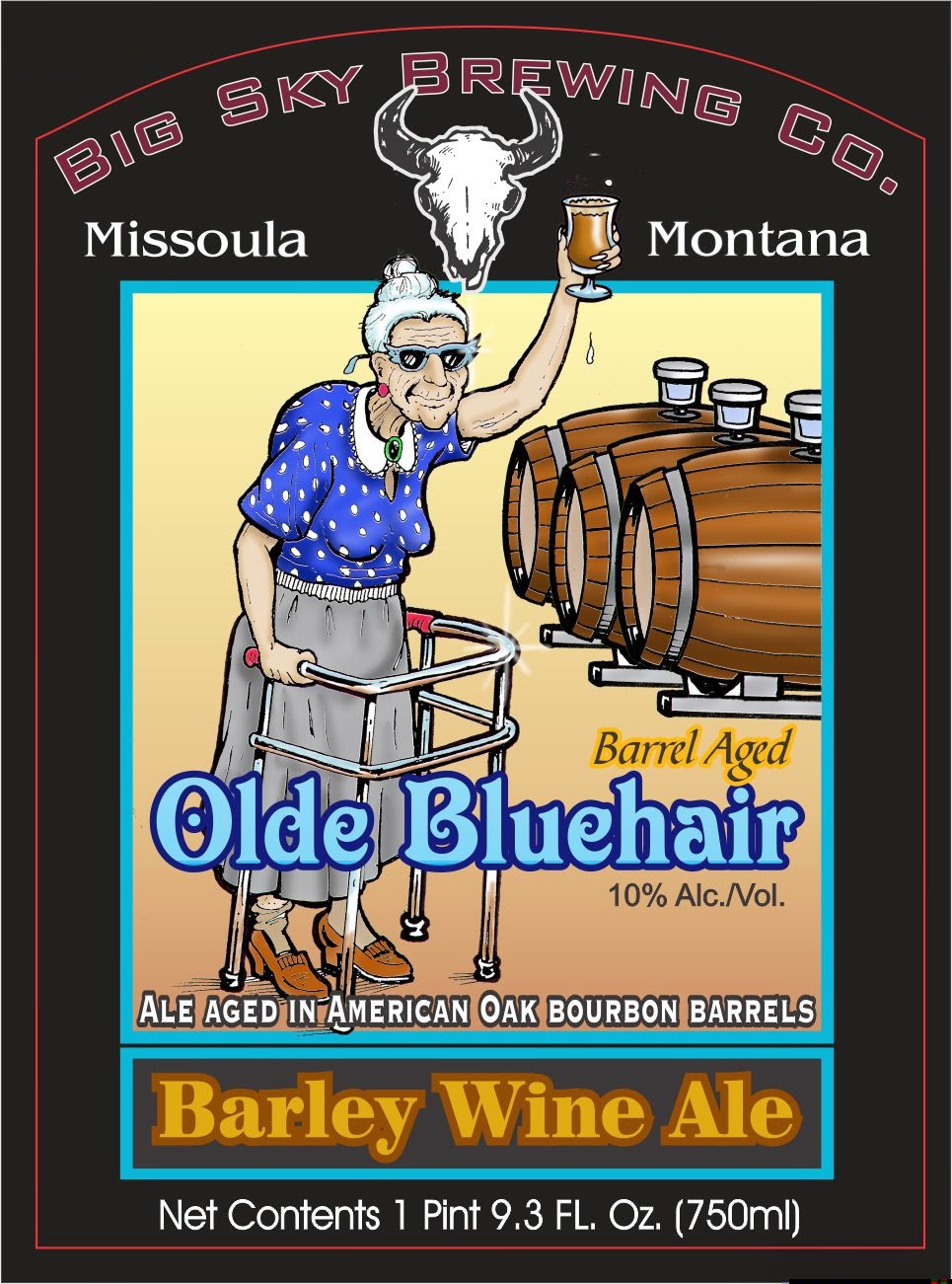
The signature of the beer we now recognize as barleywine is big malt flavor with a serious alcohol punch.  They tend to be fairly pale--at least when compared to imperial stouts--foregoing dark-kilned malts in order to showcase the flavorful English pale malt.  American barleywines tend to have more hops, both for bitterness and for flavor, while English versions let the malt be the star.  I'm not generally a fan of barleywine as the bold alcohol flavor is usually too much for me.  However my favorite examples--Sucaba from Firestone-Walker, Olde Bluehair from Big Sky, and Rye-on-Rye from Boulevard Brewing--all manage to soften the edges with a delicious caramelly sweetness.

As this will be my first barleywine, I plan on keeping things simple with 100% floor malted Maris Otter from Thomas Fawcett.  I still have some Guiness yeast on hand that's been recultured a couple times so I'll use that.  The ester profile and high attenuation should fit perfectly in a barleywine.  I grabbed a pound of Willamette hops this summer to use in English ales and stouts so I'll use some of those here.

I originally planned to use them for bittering as well, but noticed that their cohumulone content is extremely high.  Conventional brewing wisdom states that high-cohumulone hops create a harsher bitterness, but that has been questioned lately.  This link nicely sums up the research on the subject.  The verdict, while not conclusive, is that cohumulone is more soluble than adhumulone so the total bitterness just increases, as measured by laboratory IBU tests,  If the hop quantities are adjusted so that the final IBUs match, there should be no discernible difference in the character of the bitterness.  I could pick up some Magnum or Horizon to play it safe, but I think the Willamette will be just fine.


Parti-gyle Barleywine
--------------------------
Batch Size (fermenter): 5.25 gal
Estimated ABV: 9.8 %
Estimated OG: 1.099 SG
Estimated FG: 1.025 SG
Estimated Color: 6.6 SRM
Estimated IBU: 54.4 IBUs
Brewhouse Efficiency: 65.00 %
Boil Time: 90 Minutes

Ingredients:
------------
Amt           Name                                     %/IBU
21 lbs        Pale Malt, Maris Otter (2.6 SRM)         100.0 %
3.00 oz       Willamette [7.50 %] - Boil 60.0 min      49.4 IBUs
0.50 oz       Willamette [7.50 %] - Boil 20.0 min      5.0 IBUs
1.00 Items    Whirlfloc Tablet (Boil 10.0 mins)        -
0.50 oz       Willamette [7.50 %] - Boil 0.0 min       0.0 IBUs
1.0 pkg       Irish Ale Yeast (Wyeast Labs #1084)      -

Mash Schedule: Parti-gyle
Total Grain Weight: 21 lbs
Estimated Cost: $41.55


Parti-gyle Links:
BYO: Parti-gyle Brewing Techniques
Brewing Techniques: Parti-gyle Brewing
Brew Board: Parti-gyle Brewing FAQ
Braukaiser: Batch Sparge and Parti-gyle Simulator
Brew Strong: Parti-Gyle

Barleywine Links:
BYO: Big Bad Barleywine
The Jamil Show: English Barleywine and American Barleywine
Zythophile: What is the difference between barley wine and old ale?

Saturday, October 11, 2014

#34 Unhopped Ales: Gruit and Leann Fraoch - Recipes

Recipe     -     Brewday     -     Tasting

While I'm on the subject of local ingredients--blackberries, hops, more blackberries, more hops, apples and pears--let's just add another to the list: wormwood.  My friend Kristin has a small herb garden and last spring at a beerfest we decided to find a way to incorporate her herbs into a beer.  These days beers are just spiced with hops, but I remembered reading somewhere that wormwood--the headline ingredient in absinthe once thought to cause hallucinations--was once used as a bittering agent in a concoction known as gruit, back before everybody was addicted to lupulin.  Even though we're trying to brew with one of the most bitter herbs known to man, at least there's a precedent.  Of all my crazy experiments, this is one of them.


Gruit dates back to the dark ages and is the forerunner of modern beer.  An unhopped ale, it was spiced with a mixture of herbs (also known as gruit) that provided bitterness, flavor and acts as a preservative.  Myrica gale, yarrow, march rosemary, juniper, wormwood, mugwort, heather, horehound, and others found their way into the brew.  The exact composition of these blends was a closely held secret, often safeguarded by feudal lords and church officials, and varying from region to region and from era to era, so there is no canonical recipe to consult.

I've been researching this beer off and on for the last five months trying to learn as much as I can about the ingredients, their flavors, side effects, historical recipes, and ancient brewing practices.  Homebrew forums had little to say--or at least little positive to say--about gruit.  Many recipes I found dated all the way back to the Great Hop Shortage of 2008 when homebrewers found it impossible to obtain the hop varieties for many of their favorite recipes  Some tried their hand at gruit... and quickly found it a fool's errand.  After striking out, my next stop was the Brew Your Own archives for a good executive summary.  I also found the relatively authoritative Gruit Ale site had a nice overview of the history of gruit, as well as a quick round up of relevant herbs and some basic recipes.  It is well focused, but lacked the depth to make me comfortable compiling my own recipe.  I found that the source with the most detail on the herbs was Stephen Harrod Buhner's Sacred and Herbal Healing Beers.  He devoted sections to each of the primary gruit herbs, providing historical and social context to their use, and providing recipes that used each.  However Buhner is clearly an herbalist, not a brewer, as the brewing details often make little sense.  I also picked up Randy Mosher's Radical Brewing, though that turned out to be more of a showcase of crazy recipes.  It was inspiring to see the breadth of beers I have yet to brew, but the section on gruit added nothing new.


In the end I decided to brew two different recipes from two distinct traditions.  The first is a classic gruit generally following the recipes outlined in Buhner and Mosher.  Those recipes call for an even mix of yarrow, myrica gale, and marsh rosemary.  Myrica gale and marsh rosemary are distinct herbs, but are close relatives and have similar flavors and psychoactive properties.  Beer historian Martyn Cornell claims that it is unlikely both were regularly used in the same recipe, with myrica gale being the favorite when available, so I used it exclusively in this recipe.  Until I've brewed with these recipes I won't make my own observations, so go ahead and check out the resources above if you're interested: Gruit Ale for a quick brewing-focused overview and Buhner's book for a more thorough treatment.

Ingredients:
------------
Amt            Name                              Time
1 oz           Yarrow                            15 min
1 oz           Myrica Gale                       15 min
.25 oz         Wormwood                          15 min
.5 oz          Yarrow                            Dry hop (7 days)
.5 oz          Myrica Gale                       Dry hop (7 days)
.25 oz         Wormwood                          Dry hop (7 days)

As I mentioned earlier, I found the variety of beer in Radical Brewing is inspiring and one of the beers it inspired me to brew is an ancient Scottish heather ale, or Leann Fraoch in Scottish.  Before the Edward I of England drew and quartered William Wallace, before the Vikings sacked Lindisfarne, and in all likelihood well before Hadrian built his wall , the Pictish tribes used heather to flavor their brews.  If you've ever read the poem by Robert Louis Stevenson, this is the beer he's talking about.  Martyn Cornell again has an interesting post on the origins of this brewing tradition.


For my interpretation, I want to work in wormwood somewhere, as that ingredient is the reason we are brewing these beers in the first place.  Most recipes I found, including the one from Mosher and one from BYO include a small amount of hops for bittering, but that is almost certainly anachronistic.  Hops don't grow well in the northern latitudes like Scotland.  Instead I'll use the wormwood with a bit of myrica gale for bittering, then load up on heather for flavor and aroma.

Ingredients:
------------
Amt            Name                              Time
.25 oz         Wormwood                          15 min
.25 oz         Myrica Gale                       15 min
4 oz           Heather                           0 min
2 oz           Heather                           Dry hop (7 days)
.5 oz          Myrica Gale                       Dry hop (7 days)

So now that we have the spices out of the way, what about the rest of the beer?  Well before coke-fired malting and the advent of pale malt, most malt was darker in color, usually faintly smokey from the wood-fired kilns, and inconsistently modified.  I certainly don't have any malt like that, but for a rough approximation I built the grist on a blend of pale malt and brown malt.  I then added some rauch malt for just a touch of smoke and some crystal and chocolate malts to round out the recipe.  Back then beers were all mixed fermentation with a blend of yeast strains, plus brett and bacteria.  I'm not ready to through all those sorts of variables into the mix, nor risk infecting my equipment, so I'll just stick to the Irish ale yeast I have on hand.

Gruits
--------------------------
Batch Size (fermenter): 7.50 gal
Estimated ABV: 6.5 %
Estimated OG: 1.068 SG
Estimated FG: 1.019 SG
Estimated Color: 22.6 SRM
Estimated IBU: 0.0 IBUs
Brewhouse Efficiency: 65.00 %
Boil Time: 60 Minutes

Ingredients:
------------
Amt            Name                                     %/IBU
16 lbs         Pale Malt (2 Row) US (2.0 SRM)           72.7 %
3 lbs          Brown Malt (65.0 SRM)                    13.6 %
1 lbs 8.0 oz   Smoked Malt (3.0 SRM)                    6.8 %
1 lbs          Caramel/Crystal Malt - 40L (40.0 SRM)    4.5 %
8.0 oz         Chocolate Malt (350.0 SRM)               2.3 %
1.0 pkg        Irish Ale Yeast (Wyeast Labs #1084)      -

Mash Schedule: Single Infusion @154F, No Mash Out, Batch Sparge x2
Total Grain Weight: 22 lbs
Estimated Cost: $32.40
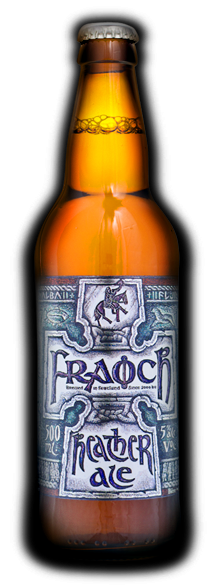
If you actually made it to the end of all that, you'll notice I dodged a very important question: what does it actually taste like?  And that's because I have no idea.  I've done some looking and while I haven't yet tried these beers, I found several that are distributed in the United States.  If you're curious, maybe you can find one yourself.

Fraoch - Williams Bros Brewing, Alloa, Scotland
Gruit - New Belgium Brewing, Fort Collins, CO
Weekapaug Gruit - Cambridge Brewing Company, Cambridge, MA
Heather Ale - Cambridge Brewing Company, Cambridge, MA
Posca Rustica - Brasserie Dupont, Tourpes, Belgium

Tuesday, September 30, 2014

#33 Wild Pear-Apple Cider

Recipe     -     Tasting

This fall has been a little hectic trying to take advantage of all the freshest local ingredients.  Blackberries, hops, and now apples have all ripened in quick succession, and friends have been nice enough to hook me up with an ample supply of each.  This time Jonny Bamboo from Martin Family Orchard hooked me up with a delicious pear/apple cider blend.


9/30/14:
The juice is Fuji apple and D'Anjou pear cider from the towns of Cashmere and Orondo in central Washington; I don't know the exact ratio but it tastes fantastic raw.  Both fruits are sweet varieties with little acidity or tannins compared to historic cider varieties.  Jonny said the juice was UV treated, but (not unexpectedly) they were naturally fermenting anyway.  From what little I've read, it's very difficult to sterilize a liquid with UV light, so those microorganisms that survive make a resurgence in the absence of competition.  The wild yeast threw up a nice little froth on the top of the cider, and the bubbling carbonation threatened to explode the jugs all over the back of my car on the way home, but I measured the SG at 1.049 so they can't have gotten too far.

In order to check this activity, I racked the individual jugs into two larger carboys--with most of a gallon held out as a control trial--leaving the yeast and sediment behind.  I then dosed both carboys with Campden tablets (potassium metabisulfite).  Sulfite works by increasing the osmotic pressure in the cells of microorganisms in the must, forcing them to exhaust their energy reserves to the point of death or at least hibernation.  After 24 hrs, the sulfite bubbles away and a preferred yeast culture can be pitched with their competition already exhausted.  (See this page for more info on sulfite.)  Since the yeast already have a healthy start on fermentation, I doubt I will stop them in their tracks but the sulfite is most effective on non-fermenting organisms which will eliminate the bacteria responsible for spoilage.  This should give me time to introduce my own yeasts for a good mixed fermentation.


In one carboy I plan to pitch some Nottingham dry yeast like I used in my dry cider last year, as I think the added esters will better fit the wild yeast and smooth out any rough edges.  In the other batch I want to really embrace the wild yeast, but I still want to make sure it's palateable, so I'm culturing up a menagerie of dregs from Spanish cider (sidra natural asturiana).

Cidermaking has been popular in northern Spain for more than two thousand years, especially in Asturias.  The ancient native apple varieties are still fermented naturally, with just the yeast of the orchard and the press.  Spanish cider tends to be slightly acidic and very dry, while the wild yeast give each brand its own distinct funk.  The yeast are never filtered out, so the bottom each bottle is a treasure trove for my purposes.

I mixed up a yeast starter by boiling one quart of water with a quarter pound of corn sugar (no malt extract, gotta keep it gluten free!) and half a teaspoon of yeast nutrient.  As I drink the ciders, I will pour the dregs into the starter in the hope that the yeast wake when introduced to a more hospitable environment.  Yes, the first strains will get a head start so it's not well controlled, but what part of this experiment is?  Here are the cider brands and their pitch date:

9/30 - Fanjul
10/1 - Val d'Ornón
10/2 - Riestra


10/3/14:  Went to pitch the yeast, but it looks like it won't make a difference.  The wild yeast has really gone to town, plowing right through the Campden tablets and low temperature (56F).   It's bubbling pretty aggressively, and I've already had some serious blowoff, leaving murky pond-water in the airlock.


11/9/14:  Racked to secondary.  This was my first taste to see how fermentation went.  Yes, the wild yeast dominate the flavor, but it's pretty tasty.  Some of the musty esters from the English yeast are apparent but don't blend as well as I hoped.  The Spanish-style cider on the other hand is cohesive yet complex, and it's hard to tell where the Cashmere bugs end and the Spanish ones start.  I'm really excited for it, but I'll let this drop clear before bottling.


12/13/14:  Bottled all 10 gal of cider.  The two batches have become more similar, both finishing at 1.006.  They never cleared up but that's ok, neither did the Spanish ciders I tried.  Added priming sugar to carbonate the batch with Nottingham yeast to around 1.8 vols.

Related Posts Plugin for WordPress, Blogger...